EQCOTWEA Planetary Ball Mill Review: Nano-Scale Milling Capacity
By TestBench Editorial Team ·
As an Amazon Associate I earn from qualifying purchases. Retail pricing is dynamic; confirm it at checkout. Details.
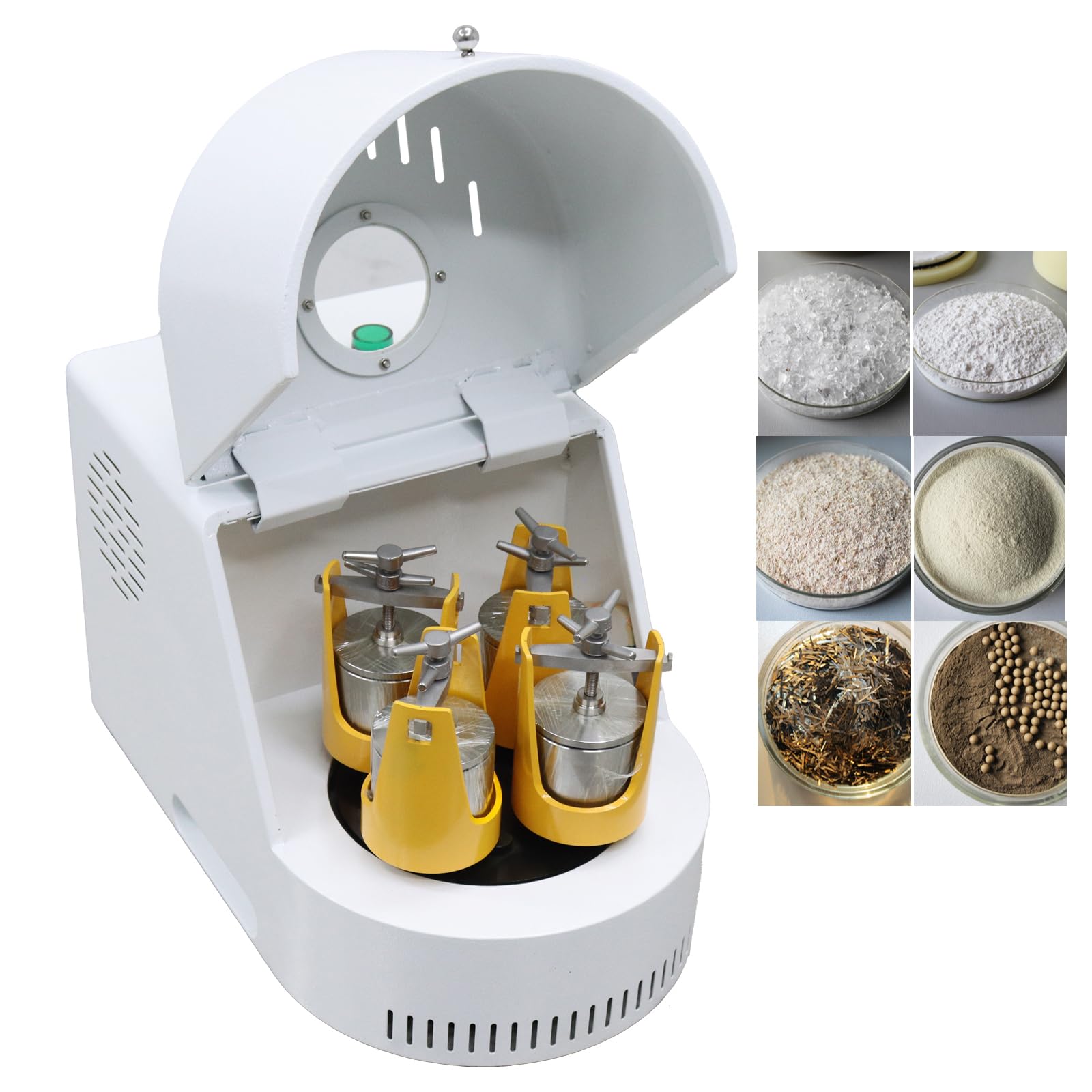
The EQCOTWEA Laboratory Ball Mill functions as a benchtop grinding system designed for precise material processing and small-scale sample preparation. It features a four-station configuration holding four 0.1 L stainless steel jars, which allows for simultaneous processing of multiple material batches. The unit weighs 33.112 kg, indicating a density expected for equipment housing a planetary drive mechanism and a thickened metal frame. An integrated frequency conversion system manages the operation, providing control over rotational speeds and timing settings to suit specific material requirements.
A built-in fan and cooling system support these internal components, regulating temperatures during extended grinding cycles. The system achieves a minimum granularity of 0.1 micrometers, which is a significant specification for research requiring nano-scale powder preparation. This level of fineness suggests the machine is capable of dry or wet grinding methods, providing flexibility for laboratories working with varied material consistencies.
The ability to run four stations independently or simultaneously increases sample throughput, provided the material volumes align with the 100 ml jar capacity. Operators should verify that this capacity meets their research output requirements, as typical industrial mills often process larger volumes in a single run. The weight of about 33 kg (73 lb) suggests the unit is stable on laboratory benches but requires significant dedicated counter space.
Users should also inspect the airflow requirements for the heat dissipation system to ensure adequate clearance around the unit, as planetary mills generate substantial heat during high-speed rotation. Buy it if you need a precise, nano-scale milling solution for small research batches and require simultaneous processing of multiple material types. Skip it if your workflow demands high-volume production or if you lack sufficient bench space for a heavy, permanently installed laboratory instrument.
Retail listings update daily. Verify current pricing on Amazon →