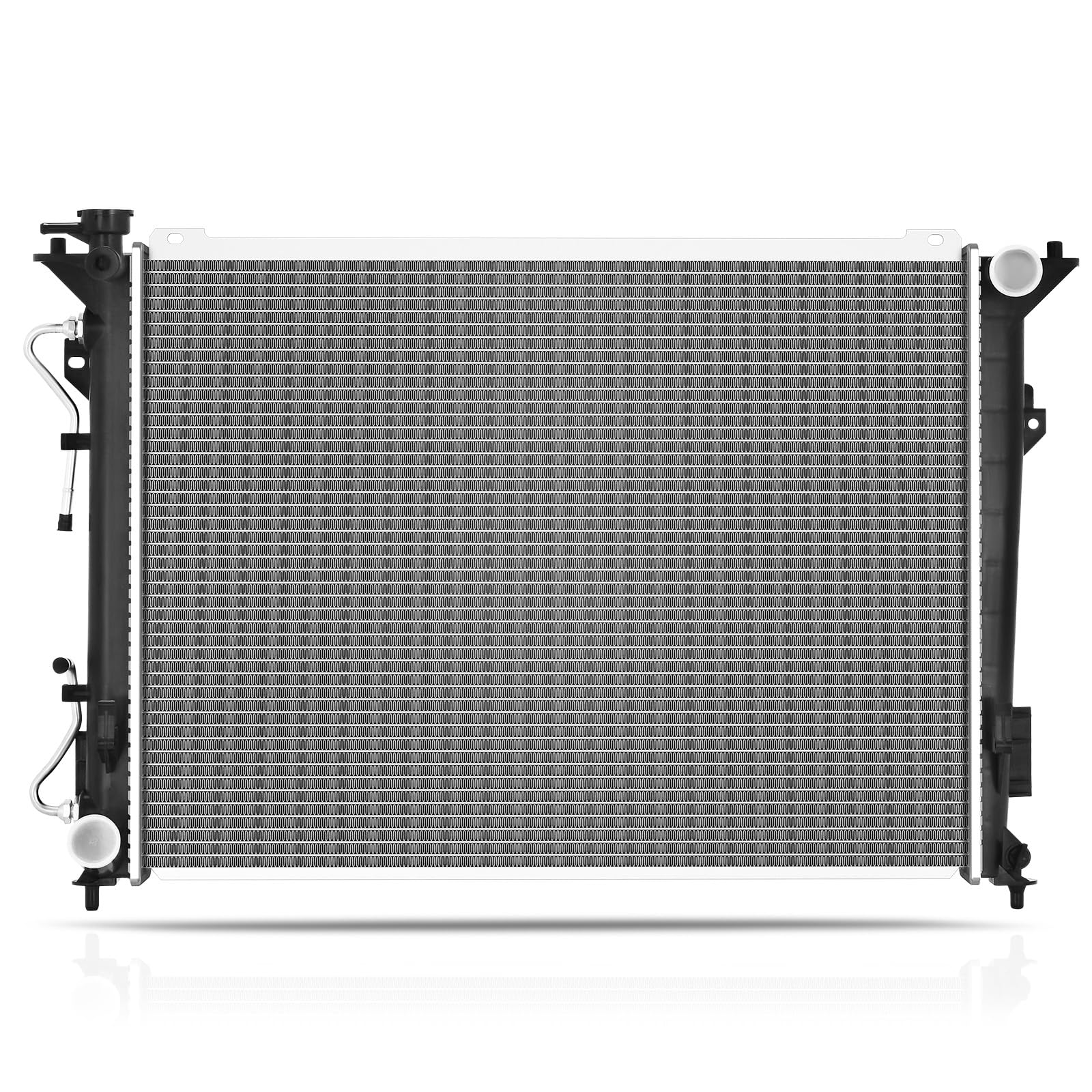
YITAMOTOR Replacement Radiator Review: A Direct Fit Cooling Solution
By TestBench Editorial Team ·
As an Amazon Associate I earn from qualifying purchases. Retail pricing is dynamic; confirm it at checkout. Details.
The YITAMOTOR radiator serves as an aftermarket cooling replacement for 2006-2010 Hyundai Sonata, 2006-2011 Azera, and 2007-2010 Kia Optima vehicles with 2.4L, 2.7L, 3.3L, or 3.8L engines. The unit features a core measuring 25 inches by 19.2 inches and utilizes high-density aluminum tubes intended to increase the radiation area for engine heat dissipation. These dimensions and material choices aim to match the factory-original equipment footprint, which is necessary for aligning with existing mounting points in the engine bay. The construction includes nylon PA66 inlet and outlet tanks reinforced with glass fiber to manage extreme heat conditions.
In practical terms, the aluminum construction implies that the radiator is lightweight while maintaining structural rigidity, which is standard for modern automotive cooling components. The use of aluminum tubes and fins translates to a larger heat exchange surface compared to smaller or more restricted designs, which helps the cooling system regulate engine temperatures effectively during operation. Because the unit is a direct replacement part, installers should expect the mounting brackets and hose connections to align with the stock configuration of the specified vehicle models. The leak-testing process mentioned by the manufacturer indicates that each unit is pressurized before packaging to ensure seals are intact upon arrival.
Compared to general automotive cooling components, this radiator follows standard industry practices for materials and testing, yet it remains a third-party replacement rather than an original manufacturer part. Buyers often see similar radiators utilizing aluminum cores with plastic end tanks, which serves as an industry compromise between thermal efficiency and manufacturing cost. One trade-off inherent in this design is that the plastic end tanks may eventually become more brittle than all-metal alternatives when subjected to years of thermal cycling, though the glass-fiber reinforcement aims to mitigate this risk. Checking the specific engine variant—whether 4-cylinder or V6—is critical before purchase, as cooling requirements differ significantly between these powertrains.
Buy it if you need an affordable, compatible radiator replacement for the specified Hyundai or Kia models and possess the tools or professional support required for installation. The unit is a suitable choice for those performing DIY engine cooling maintenance who need a pre-tested, direct-fit part. Skip it if you require an all-metal performance radiator for heavy-duty driving conditions or if you are not prepared for the labor-intensive process of replacing a cooling system component. Always verify compatibility with your specific vehicle’s engine size and year before placing an order to avoid fitment errors.
Retail listings update daily. Verify current pricing on Amazon →